Teachers across the University of Oregon recognized for their outstanding work in the classroom
Story by Tim Christie
Photos by Todd Cooper
June 4, 2026
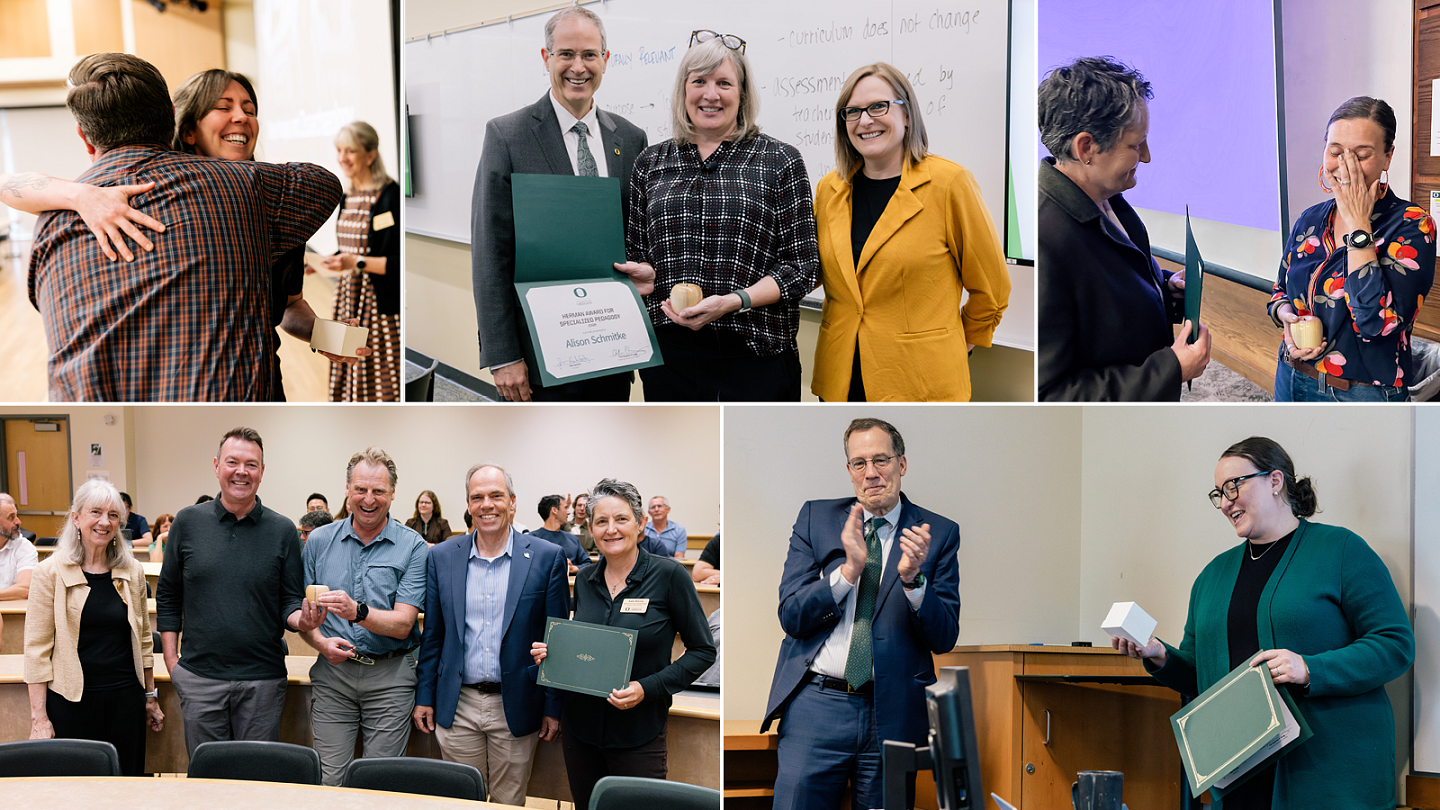
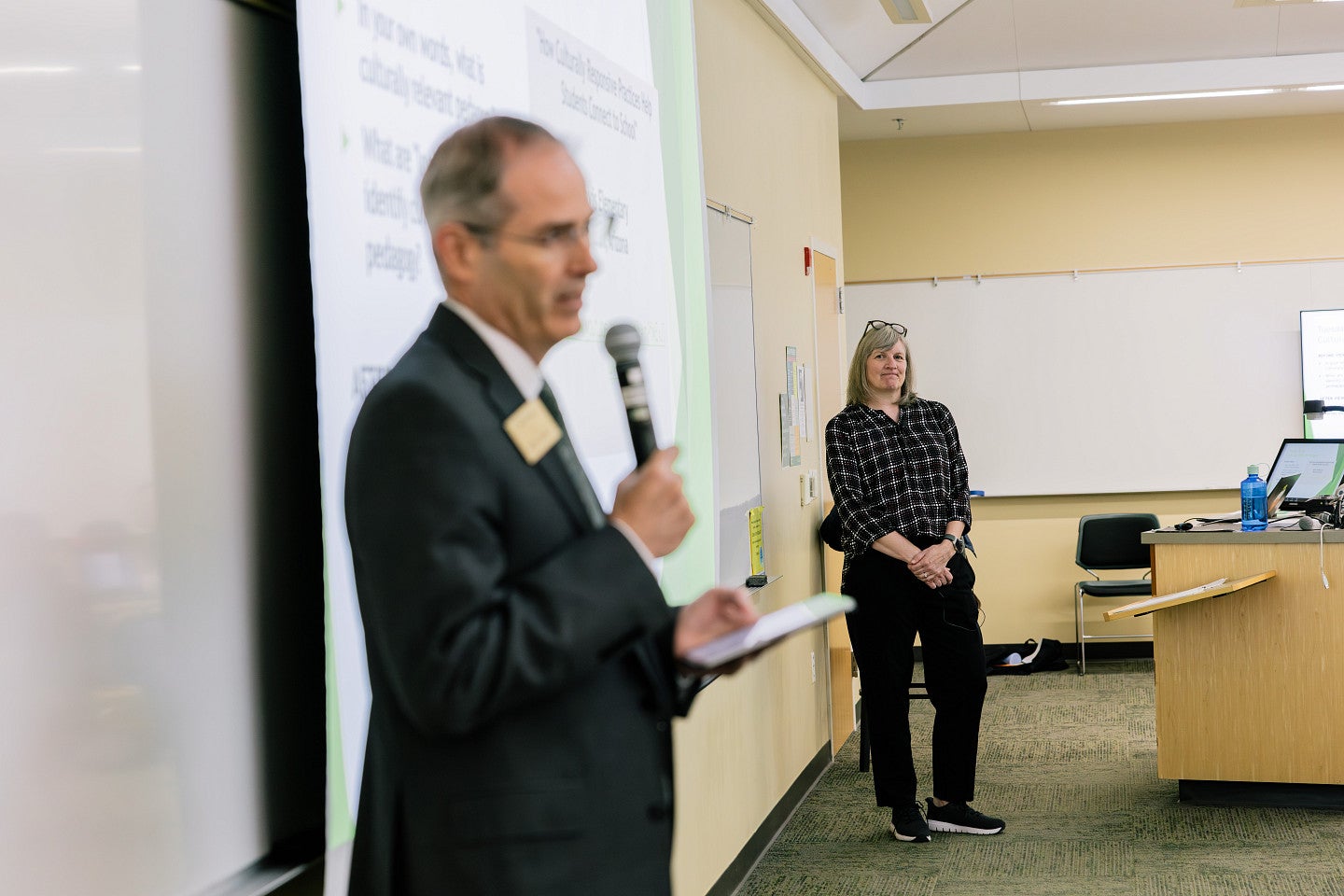
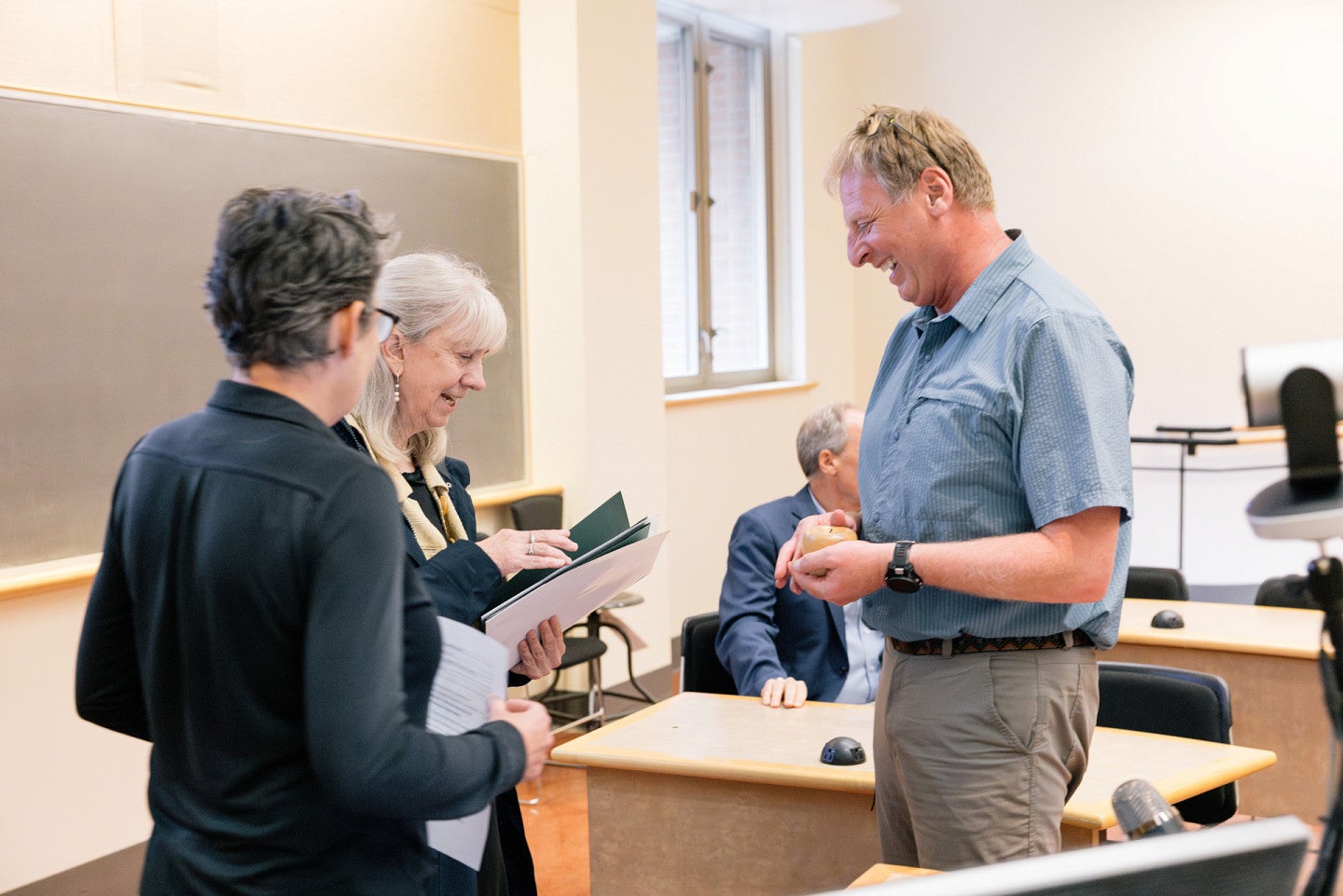
Each spring, a long-running tradition plays out in classrooms across campus: An unsuspecting professor is interrupted mid-lecture by a small delegation of UO administrators and faculty colleagues with news they have won a Distinguished Teaching Award.
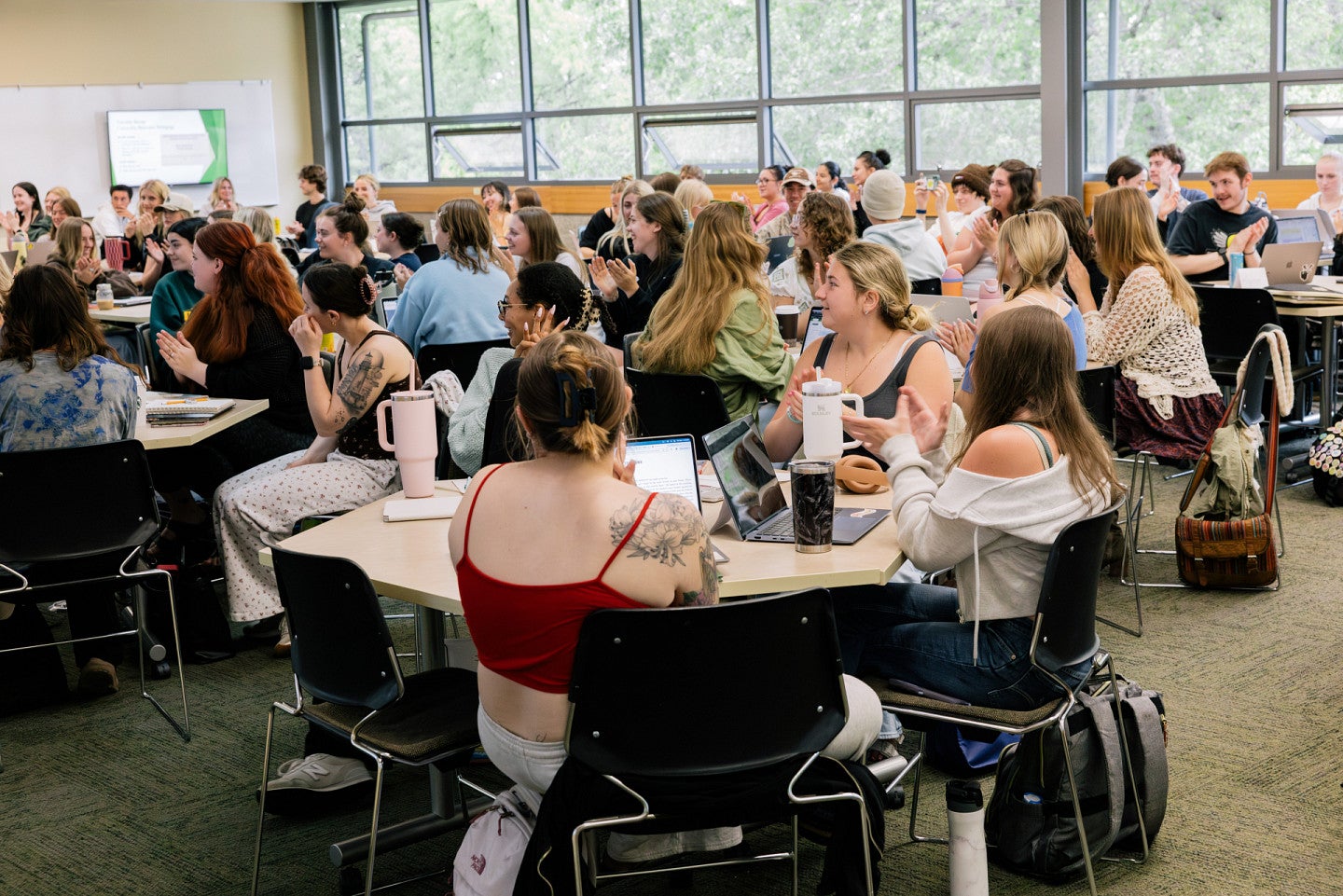
The students applaud, and often, the professor is momentarily speechless.
The Distinguished Teaching Awards are among the highest accolades given to educators at the UO, recognizing exceptional teaching that is professional, inclusive, engaged, research-informed, and central to their department’s teaching mission.
This year’s winners are:
- Megan McAlpin, clinical professor of law
- Katelyn McDonough, assistant professor of anthropology
- Alison Carter, associate professor of anthropology
- Alison Schmitke, undergraduate degree program director in the College of Education
- Courtney Thorsson, associate professor of English and faculty fellow, Clark Honors College
- Ralph Heidl, associate professor of management, Lundquist College of Business
- Brandon Julio, professor of finance and academic director, Oregon Executive MBA Program
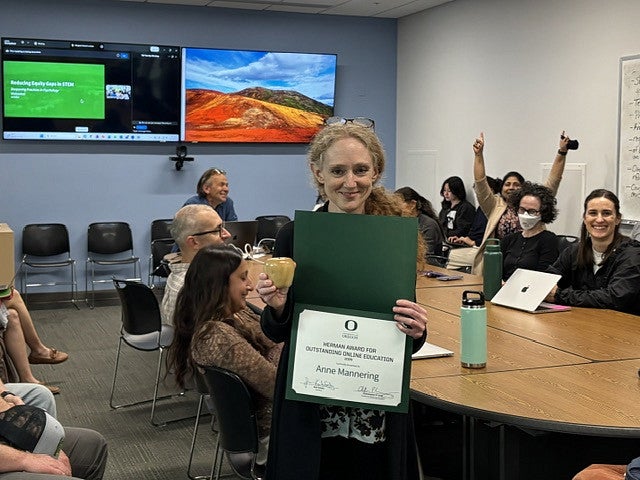
- Anne Mannering, assistant teaching professor and director, UO Online Master’s in Psychology program
"There’s always a moment of confusion when several people walk into a classroom to deliver the good news,” said Renee Irvin, vice provost for academic affairs. “The reaction on the students’ faces and burst of applause when we announce the news is terrific — it’s a bit of UO tradition that brings joy to an intense and usually stressful time of the academic calendar.”
The winners of the Herman Faculty Achievement Award and the Erstad Award for Distinguished Teaching each receive a crystal apple, a $2,000 cash award and a permanent $2,000 boost to their base salary. The winners of Herman Awards for Specialized Pedagogy, for AI Innovation, and for Outstanding Online Education receive Myrtlewood apple paperweights and $5,000 cash awards.
The recipients reflect the breadth of teaching excellence across the university and a shared commitment to innovative, student-centered teaching.
“Our winners this year span the university,” Irvin said. “These professors are admired and adored by their students. Their colleagues and department heads, as well, show great admiration for their teaching.”

Megan McAlpin
McAlpin, a member of the School of Law faculty since 2006, received the Herman Faculty Achievement Award, which honors senior career instructional or tenure-track faculty who have demonstrated long-standing excellence in teaching, and who have contributed significantly to student learning.
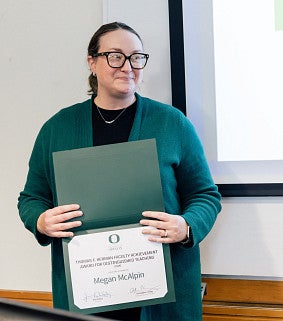
“Professor McAlpin exemplifies the values of the Herman Faculty Achievement Award through her clarity of purpose, commitment to student success, responsiveness to feedback, and leadership in teaching innovation,” UO President Karl Scholz said in presenting her the award.
She was noted for teaching that is well-organized, highly engaging, and deeply effective in preparing students for careers in the legal field. She is known for her nonjudgmental approach and attention to individual student needs. Students appreciated the opportunity to practice legal writing during class with immediate feedback, which allows them to apply guidance, ask questions, and refine their skills in real time. Outside the classroom, McAlpin plays an active role in the department’s Pedagogy Project, helping to enhance teaching across the Law School.
Katelyn McDonough
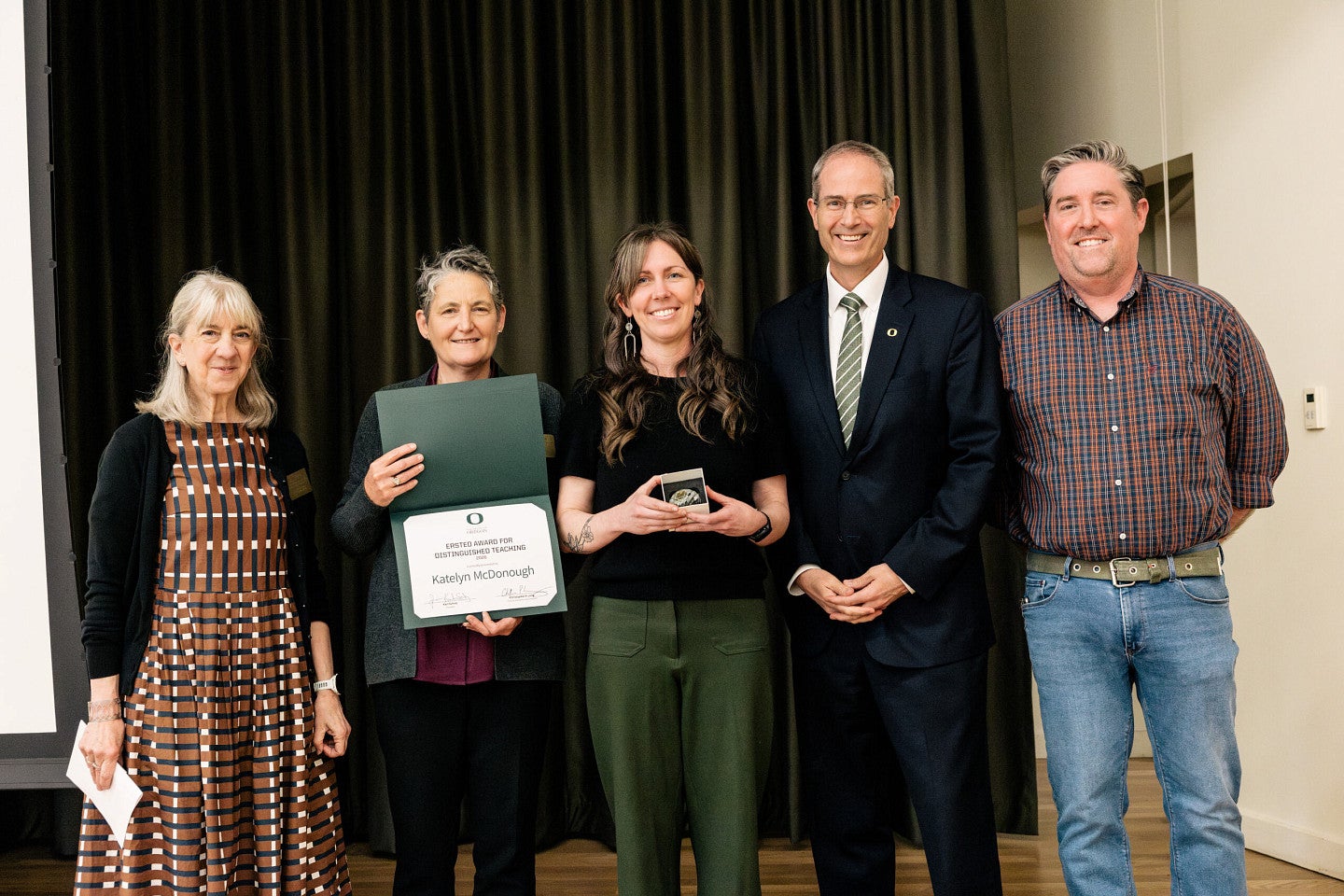
McDonough, an environmental archaeologist interested in long-term relationships between people, foodways, and landscapes, received the Ersted Award for Distinguished Teaching, which honors faculty members who have demonstrated early-career excellence.
She developed or redesigned seven courses, including the six-week Archaeology Field School, and is developing a new field school in collaboration with the Confederated Tribes of Warm Springs to help her students learn ethical and collaborative field methods grounded in respect and reciprocity.
She also developed new lab activities for introductory archaeology classes, including hands-on workshops analyzing artifact replicas, case studies to analyze pseudoarcheology, and timeline building projects to help students conceptualize major events in human history. Her students regularly present at professional conferences, publish research, and receive competitive external funding.
“Her teaching emphasizes high-impact, applied learning through project-based, inquiry-based, and simulation activities like debates, ethics bowls, workshops, hands-on labs, and mini research symposia,” Josh Snodgrass, her department head, wrote in his letter of nomination.
Alison Carter
Carter, whose research interests focus on the political economy and evolution of complex societies in Southeast Asia, received a Herman Specialized Pedagogy Award.
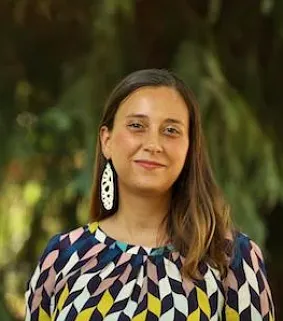
“Carter uses her expertise as an archaeologist to foster an appreciation for human cultural diversity by introducing students to ancient cultures from around the world through the use of decolonial research methods,” Snodgrass wrote.
She teaches across a wide range of formats, including large-enrollment introductory courses such as Anthropology 150, where she encourages student participation using tools such as iClicker and an assignment called “Hypothesis” to stimulate small group discussions in class.
She also plays a critical role in the department’s undergraduate curriculum, serving as director of undergraduate studies and as a mentor to undergraduates working on research projects and lab-based independent study projects. Her mentorship has helped students present their work at national conferences.
Alison Schmitke
Schmitke received a Herman Specialized Pedagogy Award for her work in curriculum design and creating equity-centered learning experiences during her 17 years on the faculty.
“She excels in large-enrollment instruction while cultivating the intimate, responsive teaching typically reserved for seminars,” her department head in the College of Education, Joanna Goode, wrote in her letter of nomination.
Her mentoring reaches all levels of student development, from first-year undergraduates through doctoral candidates and faculty colleagues. Students praise the organization of her courses, the quality of her feedback, and her supportive, caring approach, while noting that she also challenges them to do their best work.
“She exemplifies specialized pedagogical excellence through her transformative work preparing social justice-oriented educators,” Goode said. “Her specialized pedagogy creates pathways for equity and inclusion while developing students as critical thinkers and change agents.”
Courtney Thorsson
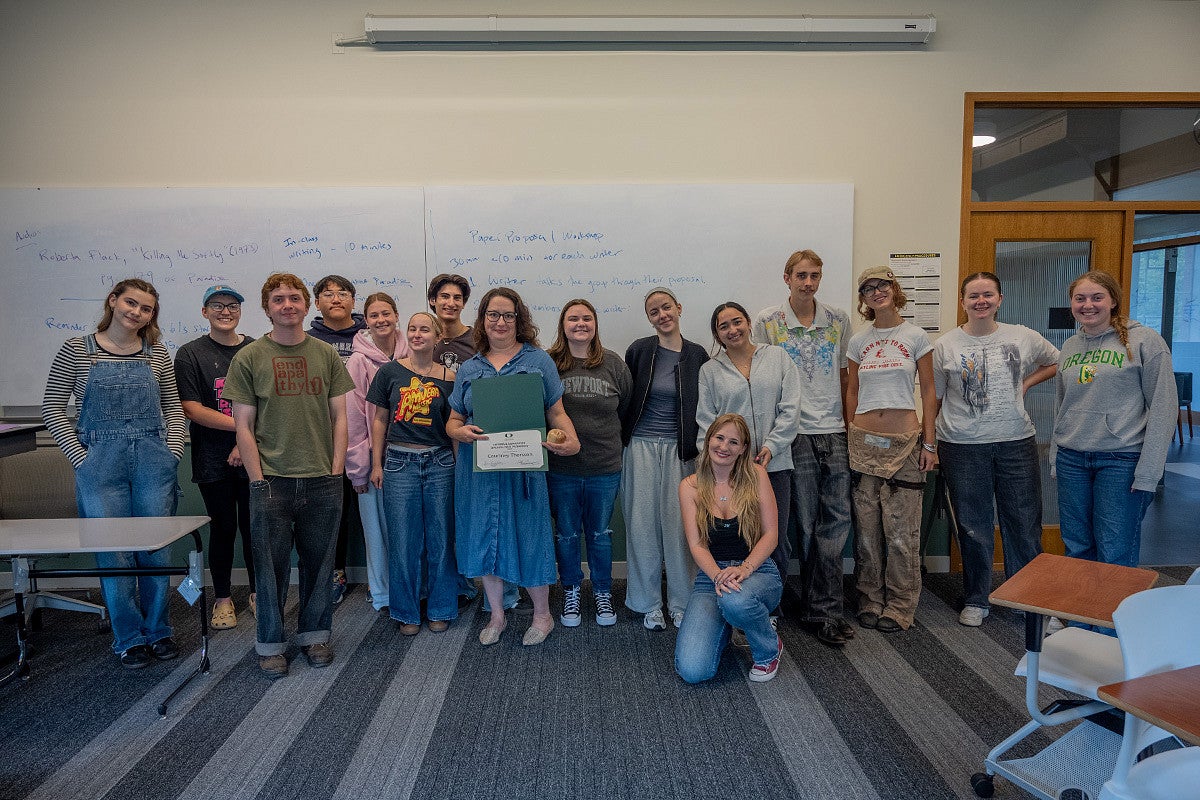
Thorsson, who teaches, studies, and writes about African-American literature, received a Herman Award for Specialized Pedagogy for her approach in teaching students that criticism can be generative and productive, and an act of joyful creation and not academic mastery, according to Clark Honors College Dean Carol Stabile.
She infuses her classes with innovative materials, including curated music playlists, visiting exhibitions at the Jordan Schnitzer Museum of Art, and guest talks from visiting scholars.
“Dr. Thorsson is a masterful teacher and class facilitator, intentionally and skillfully ensuring that all students participate actively in the course and that no students dominate the discussion,” Professor Kirby Brown said after observing her teach.
Students praise her inclusive, student-led discussions, and her ability to guide students’ understanding without forcing conclusions, encouraging them to think deeper than their first impressions.
Ralph Heidl
Heidl is an Inman Research Scholar who coordinates the management PhD program at the Lundquist College of Business and studies the interaction of technology and human decision making. He received the Herman AI Innovation Award for integrating high-level AI training for students and for helping colleagues evaluate emerging AI tools and the services of external vendors.
Heidl “has not just led the effort to get leading AI knowledge into his courses for the benefit of our students, he has been fundamental to the university's efforts to have the AI infrastructure and tools it needs to keep up this a fast-emerging technology,” said Bruce Blonigen, the Edward Maletis Dean of the business college.
“Ralph has been an incredibly collaborative colleague, motivated by helping our students be well prepared for the future and helping everyone in our college be able to more adeptly navigating the rapidly developing AI space.”
Brandon Julio
Julio, academic director of the Oregon Executive MBA program and professor of finance in the business college, received the Herman Specialized Pedagogy Award for demonstrating dedication and passion for teaching at UO since joining the faculty in 2014.
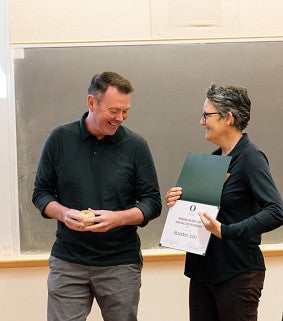
He teaches courses across the undergraduate, masters’ and PhD programs which serve as core finance requirements within their respective programs. The extraordinary quality of his teaching has “profoundly enhanced the learning experience of both our undergraduate and graduate students,” Z. Jay Wang, head of the Finance Department, wrote in his letter of nomination.
“The most impressive aspect of his teaching pedagogy is the way he seamlessly balances academic rigor with real world business applications,” Wang wrote.
In Finance 473, for instance, introduces the rigorous theoretical foundations of modern valuation models in corporate finance, then progresses to advanced, real-world techniques for apply these models through case studies, and finally shows students how to bridge the gap between theory and practice.
Anne Mannering
Mannering received the Herman Award for Outstanding Online Education. She helped establish and develop courses for the UO Online Master’s in Psychology program and serves as its director. The fully online program enables students working in community-based agencies to earn an advanced degree in applied psychology and advance in their careers.
“Mannering’s contributions to the program and her effectiveness as a teacher have been outstanding,” Ulrich Mayr, interim head of the Psychology Department, said in his letter of nomination. “She invests tremendous thought, energy and care into her teaching and she deserves much credit for the success of this program.”
Peer reviewers praised her Canvas site “that is easily the best course site I’ve ever seen at the UO or elsewhere.” Students appreciate her evidence-based learning techniques and classes that inherently address inclusivity and diversity.