
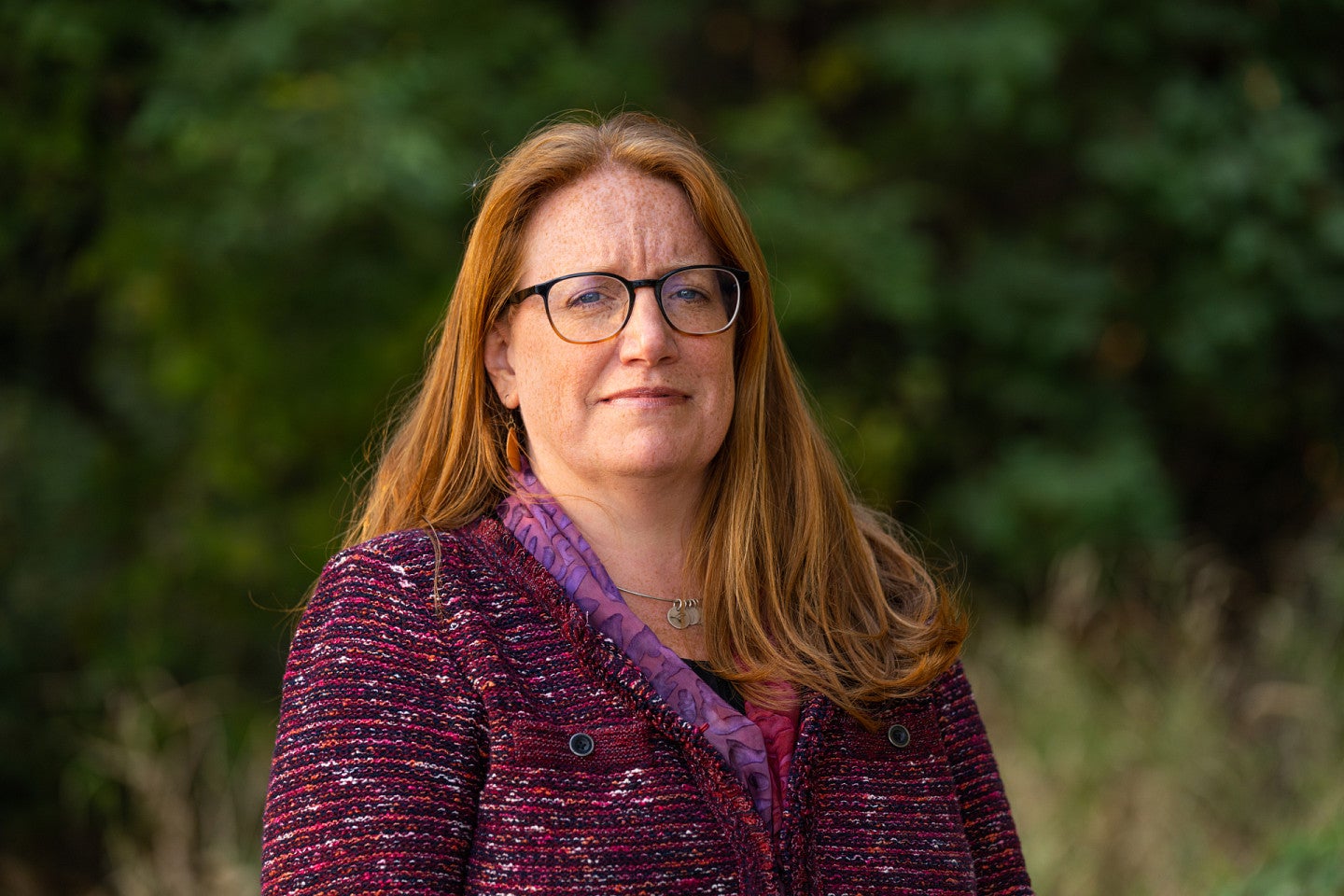
UO professor brings the passion and commitment from her career as a lawyer into the classroom
Adell Amos considers herself a reluctant academic.
Before and after joining the UO law faculty in 2005, Amos spent two stints working as a lawyer for the U.S. Interior Department. She could have made a career practicing natural resource law, she said, but returned to academia to share her knowledge.
Amos, the Clayton Hess Professor of Law, received the Herman Faculty Achievement Award for Distinguished Teaching last spring in recognition of her work teaching the next generation of lawyers.
“I love practicing law,” she said. “I became an academic to teach, so to be recognized for teaching is for me the best kind of recognition.”
As a professor of law, Amos is “rigorous, compassionate, and deeply committed to her students’ growth,” her nomination letters states. When the U.S. Supreme Court struck down the Chevron deference doctrine in 2024, “she didn’t just update her course in short order — she helped students navigate its real-world impact with clarity, care, and courage.
“She is helping students navigate one of the more fraught and dynamic legal landscapes of our time, providing intellectual guidance and personal support. She empowers students to see themselves as active agents, capable of understanding, responding to, and shaping the law.”
Amos got interested in environmental law as an undergraduate at Drury College in Missouri and was drawn to UO Law by its reputation as a pioneer in that field.
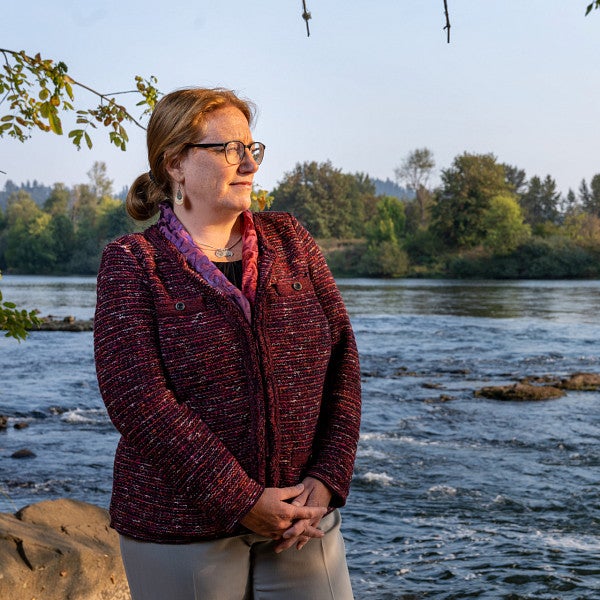
“For me, coming to law school unlocked the code to all the stuff I cared about,” she said.
After earning her law degree from the UO in 1998, she clerked for the chief judge on the Ninth Circuit Court of Appeals. She then practiced environmental and natural resource law at the Department of the Interior, where she was assigned to work on water issues in the Klamath Basin. It’s an area of law, particularly in the West, rife with conflict.
“It’s fundamental,” she said. “Societies are built around their water resources.”
She joined the UO law faculty in 2005. In 2008, she returned to Washington, D.C., to serve as the Deputy Solicitor for Land and Water Resources in the Interior Department.
In that role, she oversaw legal and policy issues involving the nation’s water resources and public lands, including water resilience and planning, wilderness policy, renewable energy, low-impact hydropower, and dam removal efforts, including the Klamath Basin Restoration Agreement.
She returned to the UO Law School in 2011 as associate dean for Academic Affairs with renewed energy for the importance of teaching and researching water resource management, public participation, and the role of law in the policy arena.
“I love practicing law,” she said. “I try to bring that passion and that commitment to my career as a lawyer into the classroom.”
She finds her professional experience resonates with students because they want to get a sense of what their life will be like as a lawyer.
That sentiment was confirmed by one student, who said: “Professor Amos clearly wants us to be the best practicing lawyers we can possibly be. As tough as some of the assignments were, I am very glad I got to experience them.”
Like her, her students want to effect change on issues they care about. She enjoys helping them unlock the code.
“All the things I’ve been able to do as a professional were made possible by this place,” she said. “This particular law school helped me launch my career and do incredible things. It feels nice to pay that back and help others to launch their careers.”
—By Tim Christie, Office of the Provost Communications