
Twelve faculty develop innovative
teaching ideas in 2023-24
Learn about the instructors who received funding from the Williams Fund to use in their classroom
This February 15, the UO Williams Council looks forward to a new set of instructional proposals and Williams Fellow nominations. At the same time, nine faculty members are busy at work on the Williams Instructional Grants proposal the Council funded last spring to develop innovative ideas for improving and changing the way undergraduate students at the UO are taught.
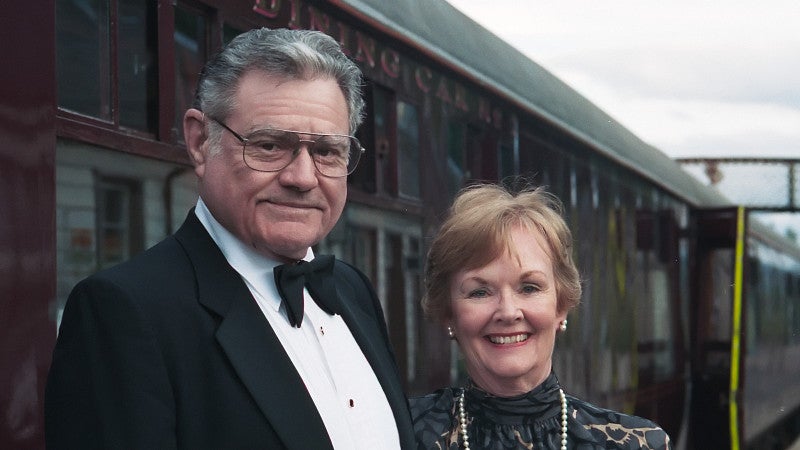
The grants program was established by Tom and Carol Williams in 1995 to support professors willing to search for better and more effective ways of learning.
Examples of proposals that have been funded over the years include innovations within specific courses; imaginative new cross-disciplinary courses; opportunities to deep students’ engagement with diverse, cross-cultural perspectives; new ways of providing peer-to-peer learning support; and new ways of conceptualizing teaching and learning within existing disciplines.
This year’s recipients are:
Jamie Bufalino, associate dean for Student Success in the College of Arts and Sciences and senior instructor of Women’s, Gender and Sexuality Studies, for her proposal, “Trailblazing: Navigating Your College Experience.” This new hybrid, first-year seminar, to be offered as a pilot program next fall, aims to help incoming students successfully navigate their college experience and develop the skills to help them achieve the university’s student success goal — “that our students will graduate having had a positive experience, and will be well educated, socially responsible, and career ready.”
Connie Dickey, senior instructor of French in the Department of Romance Languages, for her project, “Support for the Transition to IPA assessments in First-Year French.” The project will re-design all first-year French assessments to shift the focus of the program from one of “mastery” of particular structures of vocabulary to effective use of the language in real-world contexts. This change reflects the best practices of the American Council on the Teaching of Foreign Language by using integrated performance assessments, which are designed to assess students’ progress toward proficiency in the three modes of communication: interpretative, presentational, and interpersonal.
Maria Fernanda Escallón, assistant professor of anthropology, for her proposal to teach a new course called “Tourism, Rituals and Treasures: The Anthropology of Cultural Heritage.” The undergraduate, intermediate level course will examine the meaning and importance of cultural heritage in our contemporary world. Drawing on cultural anthropology, heritage studies, and archaeology, the course will examine how heritage is defined, administered, and used to build identity, foster economic development, or negotiate legacies of colonialism across the world.
Scott Fitzgerald, professor of archaeology, for his proposal to develop a new 200-level course called Introduction to Cultural Heritage Management. Sometimes referred to as contract archaeology, cultural resource management is the management of heritage resources, including both tangible and intangible assets related to archaeology, history, folklore, and architecture. Fitzgerald plans to develop this keystone course and the minor in collaboration with faculty and staff in the Archaeology Department and the Museum of Natural and Cultural History.
Maile Hutterer, associate professor in the Department of History of Art and Architecture, for her proposal to develop infrastructure to support game-based instruction, including a course called “Gaming the Middle Ages” and similar play-oriented classes. The course will use games to teach medieval art and history, including board games, live-action role-playing games, and video games to draw out critical historical concepts about medieval life and artistic production. Games would be paired with scholarly essays. Readings, in-class discussions, and assignments ask students to reflect on how games represent and mis-represent past realities. The class asks students to think critically about how popular culture shapes and is shaped by our collective imaginations.
Leslie McLees, senior instructor in the Geography Department, and Dani Amtmann, assistant director for career readiness in the University Career Center, for their proposal to further develop their career readiness course for students in the College of Arts and Sciences The challenge of the class is to push students to critically reflect on the career-ready skills that they develop as they pursue any major with a liberal arts education. These transferable skills, which include communication, critical thinking, equity and inclusion, leadership, professionalism, teamwork and technology, as well as an understanding of their individual values, interests, personality and skills, can help them think through career options and help them prepare for their next steps after graduation.
Patricia Pashby, senior instructor in the Linguistics Department and the American English Institute, for her proposal, “Own Your Grammar — Question the ‘Rules,’ Dance with Metalanguage, Explore Real Usage, Make Excellent Choices.” Her idea is to transform Linguistics 494 (English Grammar) into a dynamic course of interest and use to all UO undergraduates. Pashby plans to re-design the course so that students explore grammar in a fun, anxiety-free setting and then apply it directly to the language used in their academic field and/or career path. Students will examine the origin of many so-called rules of grammar and explore patterns of actual usage through identifying sample texts from their own field of student or career path and by conducting small-scale original research projects.
Janine Sepulveda, senior instructor in the American English Institute, for her proposal, “Reimagining the Academic English for International Students 110 Writing Course: How Do AI Tools Affect the Teaching of Foundational Writing Skills and Beyond?” With the emergence of large language models such as ChatGPT, higher education is facing a sea change in terms of how students’ knowledge is assessed and how assignments and assessments are designed. Sepulveda proposes to research how the advent of LLMs and AI will affect how her department approaches academic writing courses for international undergraduate students, and how AI can be used effectively to increase student learning, when it should not be used, and how to structure assignments in a way that students do their own original work and thinking.
Keli Yerian, senior lecturer in the Department of Linguistics and Distinguished Teaching Professor, for her project, “Paths to Language Learning,” which will allow students to develop a set of open educational online materials for Linguistics 144, Learning How to Learn Languages, using an Open Pedagogy approach, which is the practice of involving students in the creation of scholarship, so that students contribute to knowledge rather than just consuming it. The practice empowers students to be primary agents in creating course materials that are subsequently shared as open access to a public audience and continually updated by students each time the class is offered.
Ellen Herman, professor of History, and Dan Tichenor, Philip H. Knight Chair of Political Science, for their proposal to further develop and enhance the career readiness-oriented aspects of Wayne Morse Scholar courses and co-curriculum, especially lasting resources that will persist, grow, and evolve across Morse Scholars cohorts. The Wayne Morse Scholars Program provides skills building, service learning, and leadership training to students interested in public affairs and community engagement.
-- By Tim Christie, Office of the Provost